










eSense by Mindfield
Biofeedback Training
at Home
Professional biofeedback training at home. eSense sensors connect to your smartphone for real-time stress management, relaxation training, and peak performance optimization. Designed in Germany with 25+ years of expertise.
Which product is right for you?
Answer a few questions and get a personalized recommendation.
What Is Biofeedback?
Biofeedback is a scientifically validated method where physiological signals such as heart rate variability, skin conductance, skin temperature, muscle tension, or breathing rate are measured in real-time and fed back to you visually and acoustically. With eSense sensors and the free app on your smartphone, you learn to actively reduce stress, improve relaxation, and enhance your overall well-being at home.
eSense Biofeedback Sensors
Five specialized sensors for comprehensive stress management and performance optimization. All work with our free eSense App for iOS and Android.
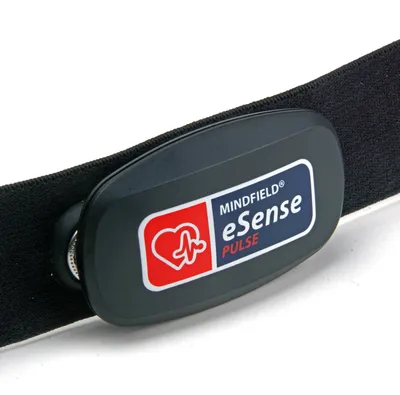
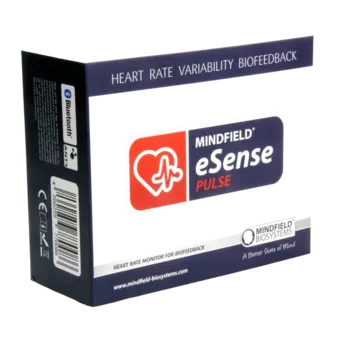
eSense Pulse
HRV Biofeedback Heart Rate Variability (HRV)Heart rate variability training with medical-grade ECG measurement
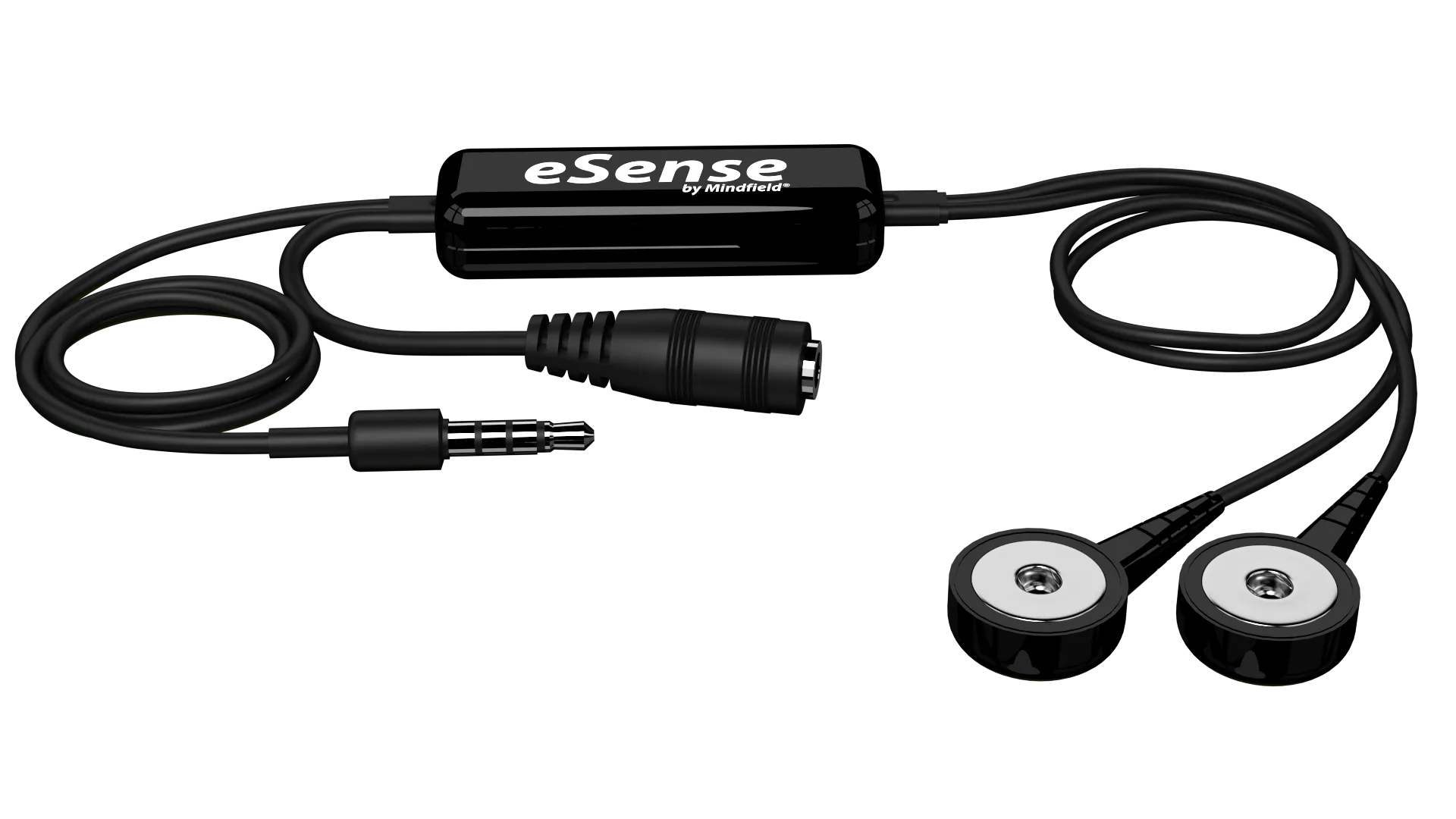
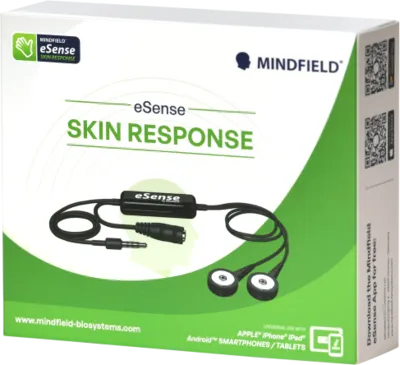
eSense Skin Response
EDA/GSR Biofeedback Electrodermal Activity (EDA)Electrodermal activity measurement for stress monitoring
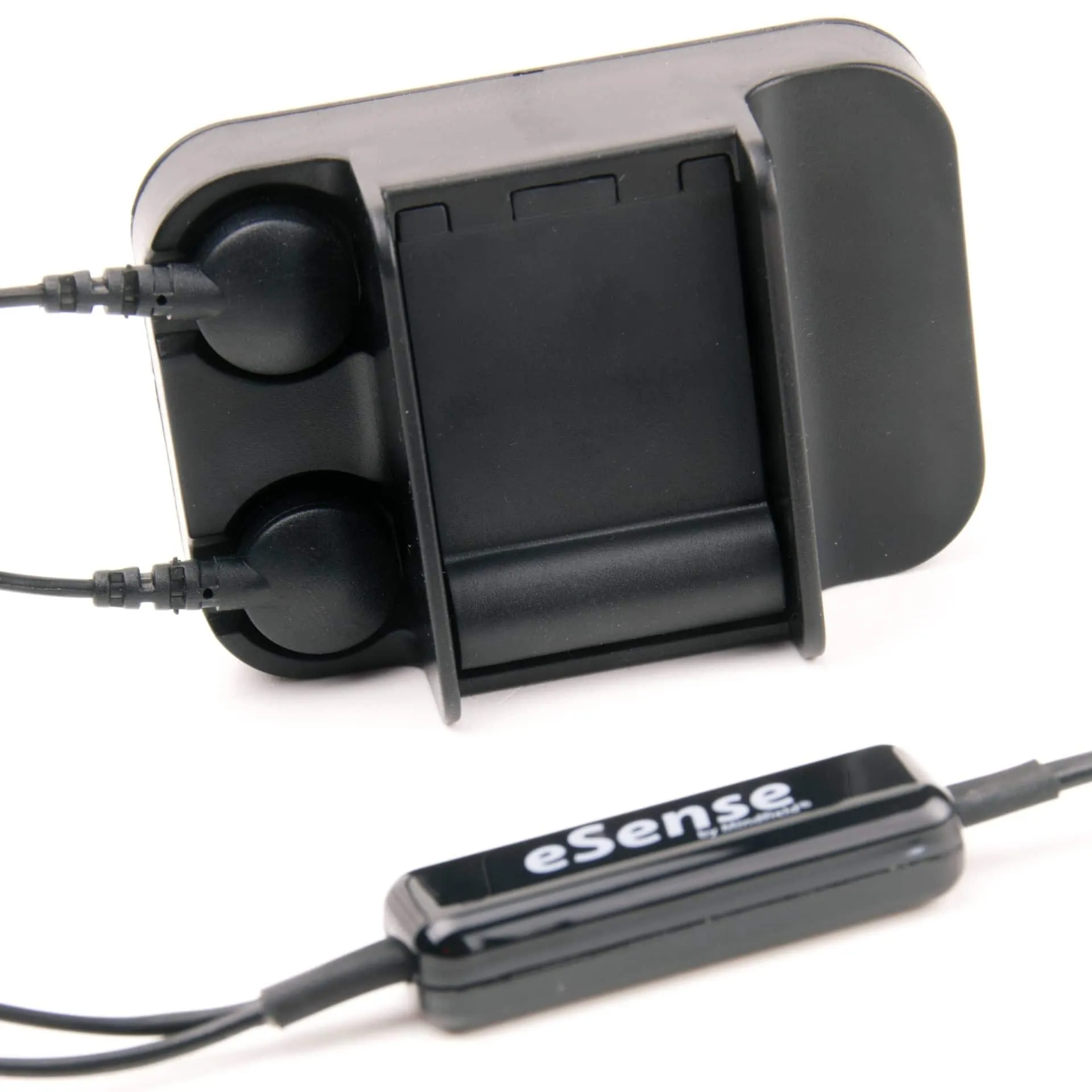
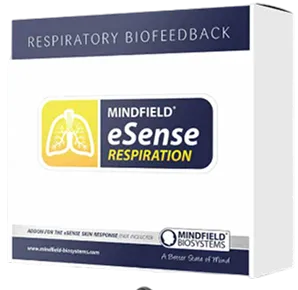
eSense Respiration
Respiratory Biofeedback Respiratory RateRespiratory rate monitoring for breathing exercises
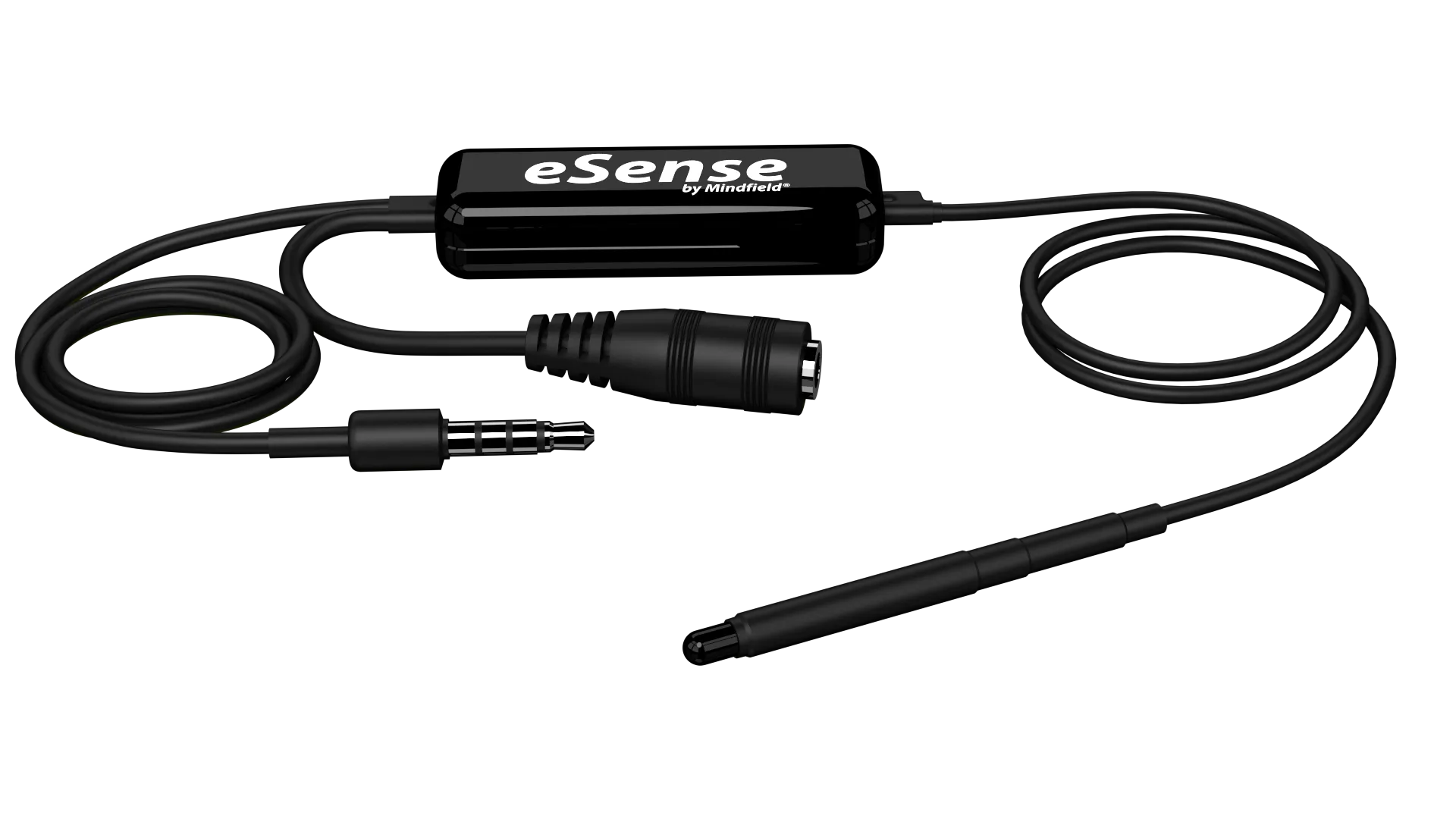
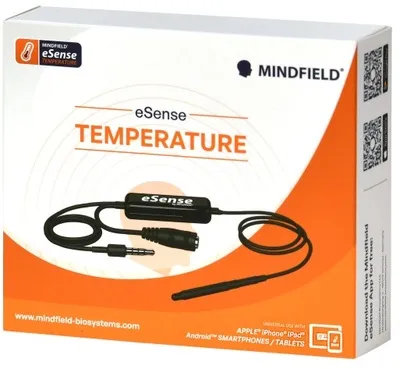
eSense Temperature
Thermal Biofeedback Skin TemperaturePeripheral temperature training for classic relaxation
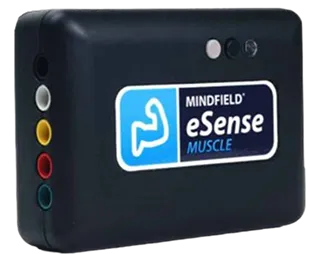
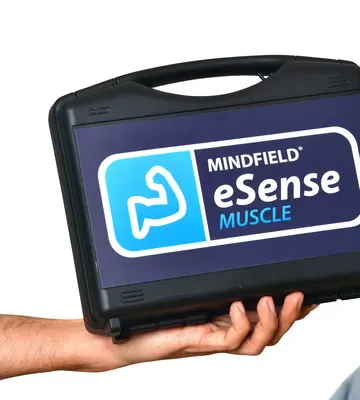
eSense Muscle
EMG Biofeedback Muscle Tension (EMG)Surface electromyography for muscle tension awareness

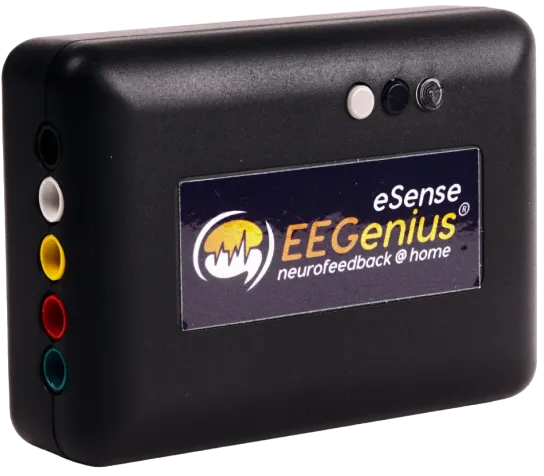
Neurofeedback Home Training
Train your brain from home – with the browser-based neurofeedback system by Mindfield. Three training focuses for memory, learning, and relaxation.
Compare Our Sensors
Watch our comparison video to find the right eSense sensor for your needs.
 Designed in Germany
  Assembly in Europe
  CE Certified
 Frequently Asked Questions
What is biofeedback and how does it work?
Biofeedback is a training method that makes normally unnoticed body signals visible so you can learn to influence them consciously. An eSense sensor continuously measures a physiological parameter such as heart rate variability, skin conductance, skin temperature, muscle tension, or breathing, and streams it to the free eSense app in real time. Seeing the signal respond the moment you tense up or relax closes a feedback loop: you try a technique, such as slow breathing, and watch its immediate effect on screen. With regular practice, many people become better at recognising their own tension and shifting into a calmer state on their own. Biofeedback is widely used to support relaxation, stress management, and general well-being. The eSense sensors bring this approach out of the lab and onto your own smartphone, so you can practise at home in short, self-paced sessions.
Which eSense sensor should I choose?
The right sensor depends on the signal you want to train with. eSense Pulse measures heart rate variability (HRV) via a chest strap and is popular for calm, coherent breathing practice. eSense Skin Response measures electrodermal activity (EDA/GSR), which reacts within seconds to tension and is ideal for building stress awareness. eSense Temperature measures peripheral skin temperature, a classic indicator of relaxation as the hands warm. eSense Muscle records surface EMG for muscle-tension awareness and relaxation, and its Pro Edition adds a Web App for professional settings. eSense Respiration tracks your breathing rate and pattern; it is an add-on that requires an eSense Skin Response or Pulse. If you are unsure, the Skin Response is the most popular entry point, while the Pulse suits anyone focused on heart-rate and breathing coherence. You can also combine several sensors over time.
Is the eSense app free? What devices are supported?
Yes, the eSense app is free to download and includes the core biofeedback features you need to start training right away: live signal display, guided exercises, and session recording. It runs on both iOS (iPhone and iPad) and Android smartphones and tablets, and each eSense sensor works with the same app, so you never pay a subscription just to use your device. A range of optional extras is available as one-time in-app purchases, including additional training programmes, music and video feedback, and cloud export of your session data for longer-term review. This means you can try biofeedback at no extra software cost and only expand later if you want more content. Always check the current device-compatibility list in the app store, as supported operating-system versions are updated over time to keep pace with new phones.
Are eSense sensors medical devices?
No. eSense sensors are CE-marked consumer wellness and training devices, not medical devices. They are designed for personal stress management, relaxation training, biofeedback practice, and general well-being, and they are explicitly not intended to diagnose, treat, cure, or prevent any disease or medical condition. The measurements they provide are for training and self-awareness, not for clinical assessment. Because of this, nothing in the app or on these pages should be read as medical advice or a promise of a health outcome. If you have a specific health concern, are undergoing treatment, or want to use biofeedback as part of therapy, please speak with a qualified doctor or therapist first and follow their guidance. Used as intended, the eSense is a safe, non-invasive tool that simply shows you your own body signals so you can practise relaxation techniques.
How do I get started with biofeedback training?
Getting started is straightforward and takes only a few minutes. First, choose the eSense sensor that matches your goal, then download the free eSense app from the App Store or Google Play. Connect the sensor to your smartphone or tablet, either by Bluetooth or the headphone/USB-C adapter, depending on the model, and open the app to see your live signal. From there, follow one of the guided sessions built into the app, which walk you through simple relaxation and breathing exercises while showing how your body responds. Many people notice a visible change in their signal during the very first session, which makes the effect of the training tangible straight away. For steady progress, a short routine of about 10 to 15 minutes a day tends to work better than occasional long sessions, since biofeedback is a skill that develops with regular, relaxed practice.
Can I use eSense sensors for professional therapy?
Yes. While every eSense is designed to be simple enough for home use, several models are also well suited to professional settings. The eSense Muscle Pro Edition in particular is built with practitioners in mind: alongside the mobile app it offers a Web App that runs on clinical workstations, making it practical for physiotherapy practices, rehabilitation, and coaching. Therapists frequently use eSense sensors as an affordable, portable complement to larger biofeedback systems, for demonstrations, for client take-home practice between sessions, and for building body awareness. Because the sensors are non-invasive and easy to set up, they lower the barrier to introducing biofeedback into a practice. Note that eSense devices remain wellness and training tools rather than medical devices, so any clinical use should fit within the practitioner's own professional judgement and local regulations for their field.
What is the difference between biofeedback and neurofeedback?
Both are feedback-based training methods, and the difference lies in what they measure. Biofeedback works with peripheral body signals: heart rate and heart rate variability, skin conductance, skin temperature, muscle tension, and breathing. Neurofeedback is a specialised form that works specifically with brain activity, recorded as an EEG. The eSense sensors are biofeedback devices, focused on the body signals above, and are made for accessible self-practice with a smartphone. Neurofeedback typically uses dedicated EEG hardware and is more often applied in professional or clinical contexts. Mindfield develops both worlds: the eSense line for mobile biofeedback, and professional neurofeedback and EEG systems such as MindMaster for practitioners. If your interest is everyday stress management and relaxation, biofeedback with an eSense is the natural starting point; brain-focused training with neurofeedback is a separate, more specialised path.